What I’m Up To..
Wichita Through the Seasons: A Year-Round Photography Planner
One of the best things about being a photographer in Wichita is that the city and surrounding landscape genuinely transform from season to season. The same stretch of riverbank that's lush and green in July is draped in gold in October and wrapped in frost in January. The Keeper of the Plains looks entirely different under a summer thundercloud than it does dusted in snow. If you're willing to show up consistently throughout the year, Wichita will reward you with an endlessly evolving set of images.
Here's your season-by-season photography planner for the Wichita area.
1. Spring (March–May): Botanica & Blooming Prairies
Spring is arguably Wichita's most photogenic season for color. Botanica Wichita erupts with tulips, irises, cherry blossoms, and ornamental trees from late March through May, offering vibrant close-up and garden photography opportunities that feel far removed from the flat prairie just outside the gates.
Visit on overcast mornings for the most saturated flower colors — cloud cover acts as a natural diffuser, eliminating harsh shadows and keeping colors rich and true. Beyond the gardens, explore rural roads east and south of Wichita where native wildflowers begin emerging in April and peak through May. Spring also brings migrating birds pouring through Kansas on the Central Flyway, making this a fantastic season to combine landscape and wildlife work in a single outing.
Spring shot list: Tulip beds at Botanica, cherry blossom canopies, prairie wildflower fields, migratory shorebirds, stormy spring skies.
2. Summer (June–August): Riverfest & Golden Sunsets
Summer in Wichita means long days, warm evenings, and the city's most beloved annual event — Riverfest. Held along the Arkansas River, Riverfest brings colorful crowds, food vendors, live music, and nightly fireworks to the riverfront, creating ideal conditions for event photography, portrait work, and documentary-style street photography. The fireworks over the river, reflected in the water, are a classic Wichita image worth capturing every year.
Summer also delivers the longest and most dramatic golden hours of the year. The sun doesn't set until well past 8:30 PM in June, giving you extended windows of warm, directional light. The Keeper of the Plains area is at its most lush, with green riverbanks framing the sculpture. For storm photographers, summer is peak season — keep your gear ready and one eye on the radar.
Summer shot list: Riverfest crowds and fireworks, golden hour at Keeper of the Plains, summer thunderstorms, sunflower fields in bloom.
3. Fall (September–November): Foliage, Fairs & Open Skies
Fall is a season of transitions in Wichita, and transitions make for great photography. The tree canopy along the Arkansas River and throughout Sedgwick County Park begins turning orange, gold, and deep red through October — pair that with the low, warm afternoon light of autumn and you have some of the most naturally beautiful shooting conditions of the year.
Don't overlook the Kansas State Fair in Hutchinson, just an hour's drive from Wichita and held each September. It's a goldmine for documentary and portrait photography — carnival rides, livestock judging, fairground food, and faces from all across Kansas create a rich, human tapestry worth exploring. Fall also brings clearer, lower-humidity air that sharpens distant views and produces crisp blue skies ideal for landscape work.
Fall shot list: River trail foliage, Sedgwick County Park in peak color, Kansas State Fair, clear blue-sky landscapes, early morning fog over fields.
4. Winter (December–February): Snow, Frost & Quiet Streets
Snow in Wichita isn't guaranteed, but when it comes, it transforms the city. The urgency is real — move fast. Head downtown before footprints and traffic disturb the freshly fallen snow and capture the graphic, minimalist compositions that only a snowfall creates: bare tree branches against a white sky, the Keeper of the Plains surrounded by ice, empty streets reflecting pale winter light.
Even without snow, winter has its own photographic appeal. Bare trees along the river create elegant, uncluttered silhouettes. The low winter sun stays at a flattering, golden angle for much of the day — unlike summer when you have a hard midday window to avoid. Frost on windows, icy puddles, and the blue-gray tones of a cold overcast day all offer moody, atmospheric shooting conditions that summer simply can't replicate.
Winter shot list: Fresh snowfall downtown, Keeper of the Plains in ice and snow, bare tree silhouettes along the river, frost details, long blue-hour exposures.
5. Keep a "Wichita Shot List" Year-Round
The most productive thing you can do as a local photographer is maintain a running shot list — a living document of locations, lighting conditions, events, and subjects you want to capture throughout the year. Keep it on your phone so you can add to it whenever inspiration strikes.
More importantly: revisit the same locations in different seasons. The Keeper of the Plains, the Old Town District, Botanica, the river trail — these are not one-and-done locations. They shift dramatically with the season, the weather, and the quality of light. The photographer who visits the same spot in January snow, April bloom, August storm light, and October gold will build a body of work that tells the full story of a place. That kind of consistency is how compelling, meaningful local photography is made.
Build your annual shot list around: Seasonal events, peak foliage dates, migration windows, moon phases for night photography, and weather patterns unique to each season.
The City Is Always Changing — So Should Your Photography
Wichita is a city that rewards the photographers who pay attention to it all year long. Every season brings something new, something fleeting, and something worth preserving. The goal isn't to capture Wichita once — it's to keep showing up and letting the city surprise you.
Which season is your favorite for photography in Wichita? We'd love to hear your picks in the comments.
Thanks for following along with our Wichita Photography Series!
Flat Land, Big Sky: A Storm & Landscape Photography Guide for the Wichita Region
There's something humbling about standing in the middle of the Kansas prairie with a storm building on the horizon. The sky takes up 80% of your frame, the land stretches flat in every direction, and the atmosphere does things you simply can't see anywhere else. For landscape and storm photographers, the Wichita region isn't a limitation — it's a superpower.
Here's how to make the most of Kansas's dramatic skies and wide-open terrain.
1. Safety First — Always Have an Escape Route
Before we talk about composition, lenses, or settings, we need to talk about safety — because storm photography in Kansas is not something to take lightly. Tornadoes, large hail, and dangerous lightning are real hazards that kill people every year in this region.
The golden rule: never position yourself somewhere you can't escape quickly. Always keep your vehicle pointed away from the storm and on a road that gives you clear options to drive perpendicular to the storm's movement. Monitor radar in real time with an app like RadarScope and never rely on a single data source. Know your storm basics — rotating wall clouds, hook echoes on radar, and the sound of approaching hail. No photograph is worth your life. Shoot smart.
2. Find Elevated Ground for Unobstructed Views
The Wichita area is flat — genuinely flat — but small elevation changes still matter enormously for landscape photography. Even a modest rise in terrain can mean the difference between a foreground cluttered with utility lines and fences, and a clean, sweeping view of a storm system or sunset.
Explore rural roads heading south and west of Wichita toward Kingman, Pratt, and Harper counties. Out here, grain elevators, highway overpasses, and gentle ridge lines offer slightly elevated vantage points with unobstructed 360-degree sky views. Don't overlook highway rest stops and overpass pullouts — they're legal, safe to park at, and sometimes surprisingly effective shooting positions.
3. Shoot the Milky Way on Dark, Moonless Nights
Kansas is one of the better states in the central U.S. for Milky Way photography — the key is simply getting outside of Wichita's light dome. A drive of 30–45 minutes in almost any direction will take you into genuinely dark skies, particularly heading toward rural Kingman or Harper County to the southwest.
For Milky Way shooting, use the widest, fastest lens you own (14–24mm, f/2.8 or wider), crank your ISO to 3200–6400, and calculate your maximum shutter speed using the 500 Rule (divide 500 by your focal length to get the max seconds before stars trail). A foreground element — a grain elevator, an abandoned farmhouse, a lone tree — transforms a simple star field into a compelling image. Plan your shoots around the new moon phase for the darkest skies.
4. Embrace Dramatic Pre-Storm Light
Seasoned Kansas landscape photographers will tell you: some of the most extraordinary light of their careers happened not during a storm, but in the 15–30 minutes before one arrives. As a storm system approaches, the sky can turn an otherworldly green-yellow, and the contrast between the dark, anvil-shaped clouds and the sunlit wheat fields below creates jaw-dropping visual drama.
This is also prime time for lightning photography. Set your camera on a tripod, use a remote shutter release, and shoot long exposures of 5–15 seconds pointed toward distant lightning activity. Apps like LRTimelapse or a basic intervalometer can automate the process so you're not manually triggering shot after shot. As always — keep your distance and maintain your escape route.
5. Use a Lone Tree or Grain Elevator as an Anchor
One of the most common mistakes in Great Plains landscape photography is shooting the sky without giving the viewer's eye anywhere to land. A vast, dramatic sky over a completely empty, featureless field can feel impressive in person but fall flat in a photograph. You need a subject.
Fortunately, the Kansas landscape offers iconic anchors in abundance: a solitary cottonwood tree in a field, a weathered wooden barn, a towering grain elevator rising from the flat earth, a windmill silhouetted against a stormy sky. These elements do double duty — they anchor the composition and reinforce the sense of scale that makes the Kansas sky so breathtaking. When you find a great foreground element, note its location and return to it in different seasons and weather conditions.
Kansas Rewards the Patient Photographer
Storm chasing and landscape photography in Kansas are both long games. You might drive three hours and come home with nothing. You might pull over on a back road on a whim and capture the image of your life. That unpredictability is part of what makes it so compelling. Stay safe, stay patient, and keep showing up — the Kansas sky always delivers eventually.
Share your best Kansas storm or landscape shots with us in the comments — we'd love to see what you've captured.
Next in the series: Wichita Through the Seasons – A Year-Round Photography Planner
Wichita's Wild Side: A Nature & Wildlife Photography Guide
Kansas has a reputation for being flat and featureless — a state you drive through on the way to somewhere else. But ask any wildlife photographer who's spent time in the Wichita region, and they'll tell you a different story. From urban parks teeming with herons and waterfowl to one of the most significant migratory bird refuges in North America just 90 minutes away, this corner of the Great Plains is genuinely wild — if you know where to look.
Here's your guide to nature and wildlife photography in and around Wichita.
1. Visit Chisholm Creek Park for Bird Photography
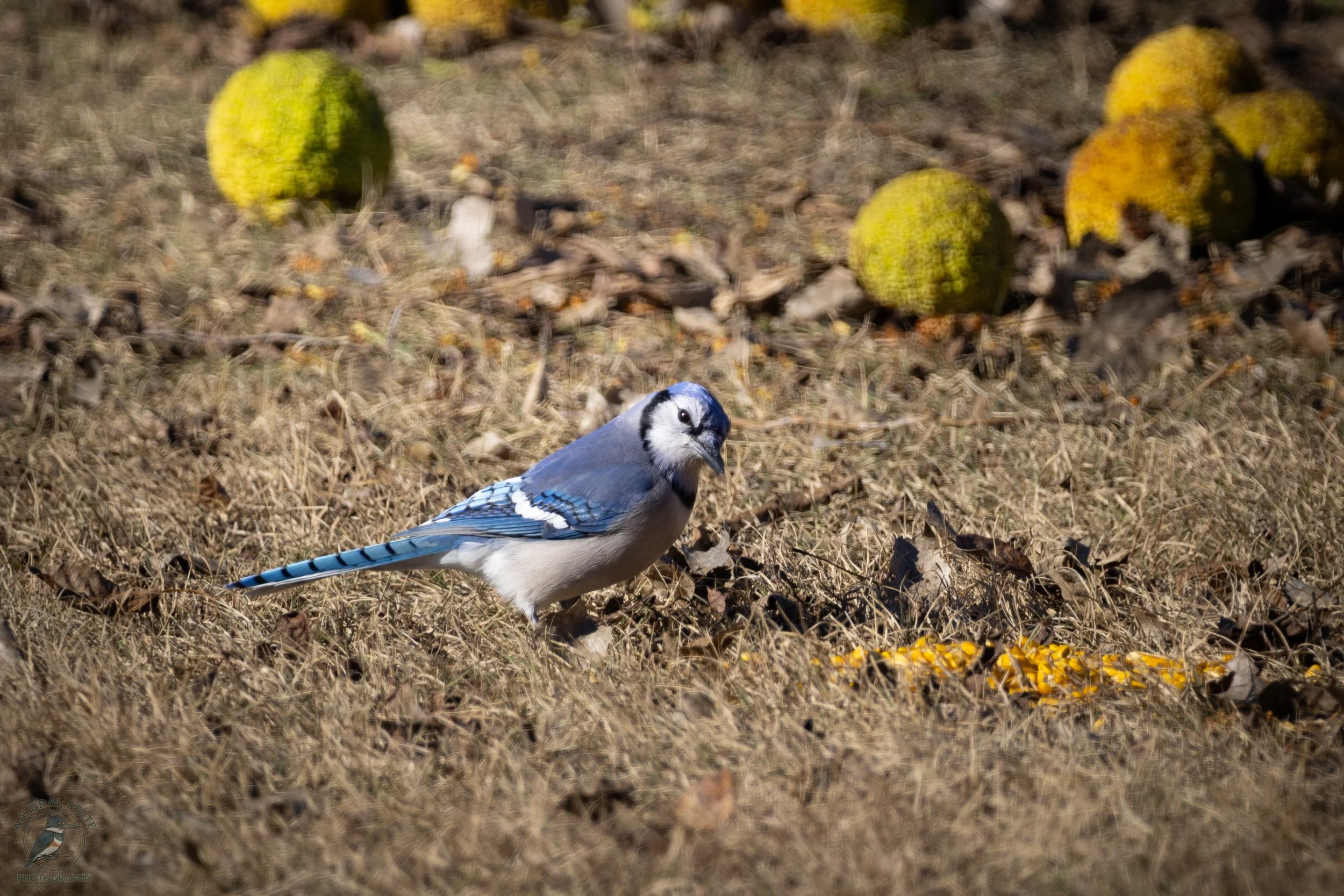
Chisholm Creek Park on Wichita's north side is one of the city's most underrated photography locations. The creek, ponds, and surrounding woodland habitat attract an impressive variety of wildlife year-round — great blue herons standing motionless in the shallows, egrets hunting along the banks, wood ducks, kingfishers, and a rotating cast of migratory songbirds depending on the season.
For bird photography here, a telephoto lens of 300mm or more is your best friend — it lets you fill the frame with a subject without getting close enough to disturb it. Early morning is when wildlife activity peaks, so plan to be on the trails at or just after sunrise. Move slowly, speak quietly, and give yourself time to let the park settle around you before expecting action.
2. Day-Trip to Quivira National Wildlife Refuge
If you're serious about wildlife photography in Kansas, Quivira National Wildlife Refuge deserves a dedicated trip. Located about 90 minutes northwest of Wichita near Stafford, Quivira is a federally protected wetland complex and a globally significant stopover point for migratory birds on the Central Flyway.
During spring and fall migration, the refuge fills with thousands of shorebirds, sandhill cranes, white pelicans, and waterfowl. The numbers can be staggering. Bring your longest lens, and consider using a bean bag or window mount for shooting from your vehicle — many birds at Quivira are surprisingly tolerant of cars, making vehicle-based shooting highly effective. Check the refuge's website for seasonal highlights before you go.
3. Photograph Wildflowers at the Right Time
From late April through June, the roadsides and open prairies around Wichita come alive with wildflowers. Native Kansas species like prairie coneflowers, wild bergamot, black-eyed Susans, and the iconic sunflower emerge in waves through the season, offering both wide landscape opportunities and intimate close-up work.
For flower photography, get low and go wide open. A macro lens or a standard lens set to a wide aperture (f/2–f/2.8) will throw the background into a soft, creamy blur, isolating your subject against a wash of color. Shoot in the early morning when light is soft and dew is still present on petals. Avoid the midday sun, which creates harsh shadows and bleaches out delicate colors.
4. Use "Quiet Patience" as Your Best Tool
No telephoto lens, no expensive hide, no special technique replaces this: stillness. Wildlife photography fundamentally rewards the photographer who can slow down, sit quietly, and wait.
Find a promising spot near water, a woodland edge, or a meadow. Get yourself set up and settled — camera ready, settings dialed in — and then simply stop moving. Turn off your phone notifications, minimize your fidgeting, and let the natural world forget you're there. Birds and mammals that were alarmed by your arrival will gradually resume their normal behavior, often coming surprisingly close. The best wildlife images usually aren't chased down — they're waited for.
5. Sedgwick County Park for Accessible Nature Shots
You don't always need to drive far to find great nature photography in Wichita. Sedgwick County Park on the city's northwest side is a large, varied park with wooded trails, open grassland, and the Little Arkansas River running through it — all within easy reach for a morning or evening shoot.
Fall is the standout season here, when the tree canopy along the river turns to orange, gold, and deep red and the slanting autumn light makes everything glow. But the park offers something in every season: spring wildflowers along the trails, summer dragonflies over the water, and bare winter trees with graphic, minimalist silhouettes against a pale sky. It's the kind of place that rewards regular visits throughout the year.
Get Outside and Shoot
The Wichita region's natural world is far richer than most people give it credit for. All it takes is getting outside early, moving slowly, and paying attention. Whether you're shooting herons at Chisholm Creek or sandhill cranes at Quivira, Kansas has a way of rewarding photographers who show up with patience and curiosity.
What's your favorite wildlife photography spot in the Wichita area? Let us know in the comments below.
Next in the series: Flat Land, Big Sky – A Storm & Landscape Photography Guide
Hidden Wichita: An Urban Exploration Photography Guide
Wichita doesn't always get credit for its visual character — but spend an afternoon wandering its older neighborhoods and downtown streets with a camera, and you'll quickly realize this city has layers. Weathered brick walls, bold street murals, rain-slicked alleyways, and historic storefronts all offer rich textures and stories waiting to be captured.
You don't need to travel far to find compelling subjects. Here's how to uncover the hidden visual gems that make Wichita a surprisingly great city for urban exploration photography.
1. Hunt for Murals in the Douglas Design District
The stretch of Douglas Ave known as the Douglas Design District is one of Wichita's most visually dynamic areas. Large-scale murals cover building facades, and new pieces seem to appear regularly, making it a spot worth revisiting throughout the year.
When photographing murals, don't just shoot straight-on documentation shots. Look for interesting leading lines — a road, a sidewalk, a row of parked bikes — that draw the eye into the frame. Incorporate people when you can: a cyclist passing in front of a mural or a pedestrian pausing to look adds a sense of scale and life to an otherwise static image. Early morning light hits the east-facing walls beautifully, while late afternoon works well for west-facing pieces.
2. Explore Old Town's Brick Textures & Architecture
Old Town Wichita is a treasure chest for texture-focused photography. The neighborhood is packed with late 1800s and early 1900s brick warehouses, rusted metal signage, arched windows, and worn wooden doorframes — all of it dripping with character.
The secret weapon for shooting here? Overcast days. Cloud cover acts like a giant softbox, eliminating harsh shadows and bringing out the rich, warm tones of the brick without blowing out highlights. It's also a great neighborhood to slow down and shoot details — a peeling painted advertisement on the side of a building, a vintage door handle, a crumbling cornice — rather than always reaching for the wide establishing shot.
3. Find Reflections in Unexpected Places
One of urban photography's best-kept secrets is the puddle. After rain, the streets, parking lots, and alleyways around downtown Wichita become temporary mirrors — reflecting neon signs, streetlights, illuminated storefronts, and the colorful murals above.
These opportunities are fleeting, lasting only an hour or two before the water evaporates or drains away, so move quickly when rain hits. Get low — really low — to maximize the reflection in your frame. Even a small puddle can reflect an entire building when your lens is close to the ground. Try shooting in the early evening when artificial lights are on but there's still just enough ambient light to balance the exposure.
4. Visit the Delano District for a Historic Feel
Before Wichita was Wichita as we know it today, Delano was a wild frontier settlement just across the Arkansas River — a lawless end-of-trail stop for cattle drives on the Chisholm Trail. That history is still embedded in the architecture and atmosphere of the neighborhood today.
Delano offers a grittier, more documentary feel compared to the polished parts of downtown. It's well-suited for street photography and black-and-white work — the contrast between old storefronts, working-class streetscapes, and the occasional burst of color makes for compelling, honest images. Early mornings give you quiet streets and long, dramatic shadows ideal for moody monochrome compositions.
5. Look Up — and Down
Here's the tip that separates good urban photographers from great ones: vary your perspective constantly.
In Wichita's downtown, most people walk through at eye level and never think to look up. But above you are fire escapes, ornate cornices, rooftop water towers, and converging lines of architecture that create dramatic, graphic compositions. Tilt your camera skyward between historic brick buildings and you'll find unexpected geometry.
Then go the other way — crouch low and shoot at ground level. Manholes, cracked pavement, reflective surfaces, and ground-level architectural details become entirely new subjects when seen from a few inches off the ground. Changing your perspective costs nothing but a moment of awareness, and it transforms ordinary city scenes into something worth a second look.
Go Explore Your City
The best thing about urban exploration photography is that it trains you to see your own city differently. Wichita rewards the curious photographer — the one willing to turn down an alley, stop in front of a brick wall, or crouch in a puddle for the shot. Take your time, walk slowly, and look for the details most people hurry past.
Have a hidden Wichita spot we should know about? Share it in the comments!
Next in the series: Wichita's Wild Side – A Nature & Wildlife Photography Guide
Golden Hour in Wichita: Your Complete Sunrise & Sunset Photography Guide
If you've ever stood at the edge of the Arkansas River as the sun dipped below the horizon and painted the sky in shades of amber and rose, you already know — Wichita does golden hour beautifully. The wide-open Kansas sky, the river's mirror-like surface, and the city's understated skyline combine to create some genuinely stunning photographic opportunities. You just have to know where to go and when to show up.
Here are five tips to help you make the most of golden hour photography right here in Wichita.
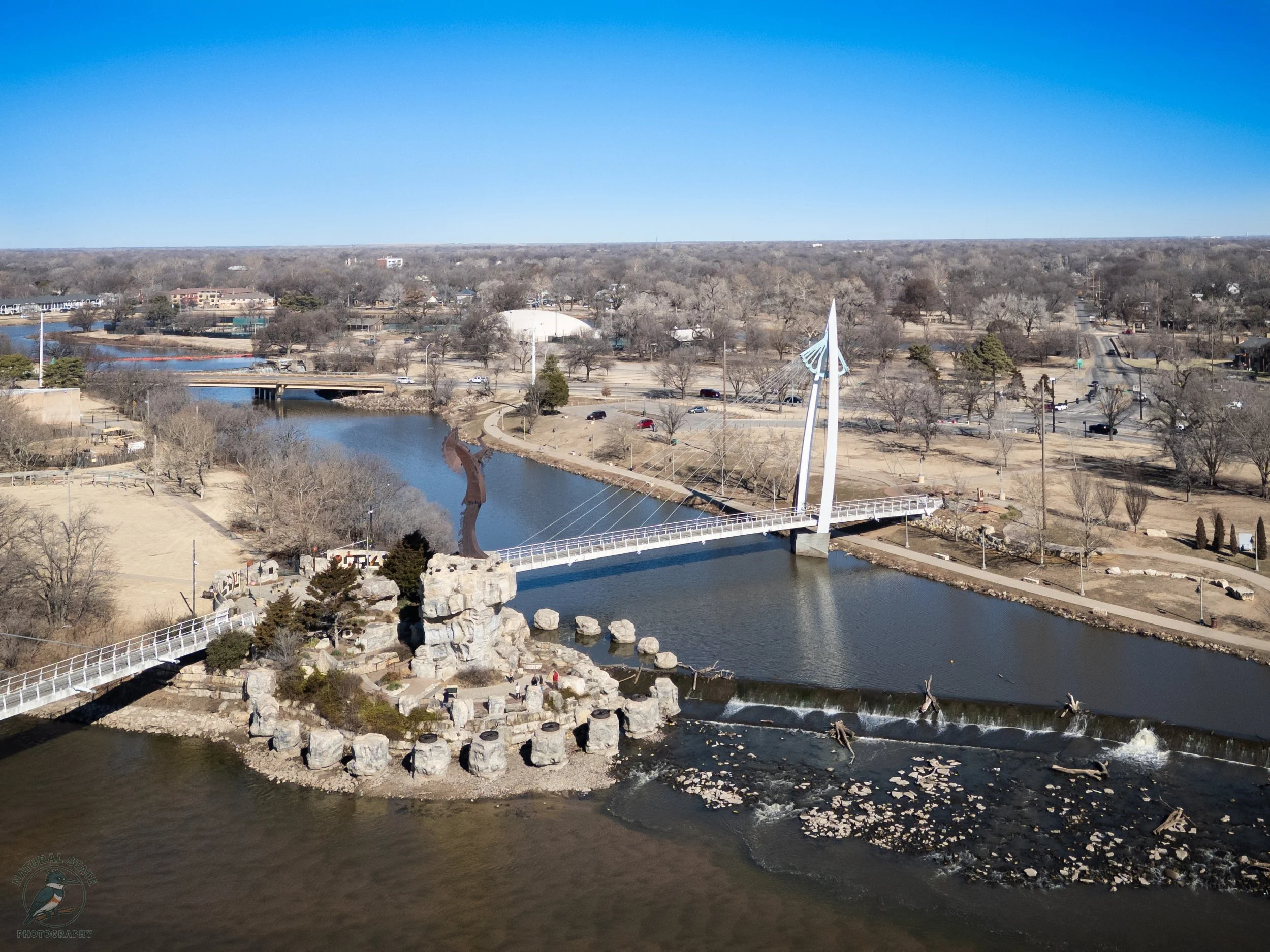
1. Shoot the Arkansas River at Keeper of the Plains
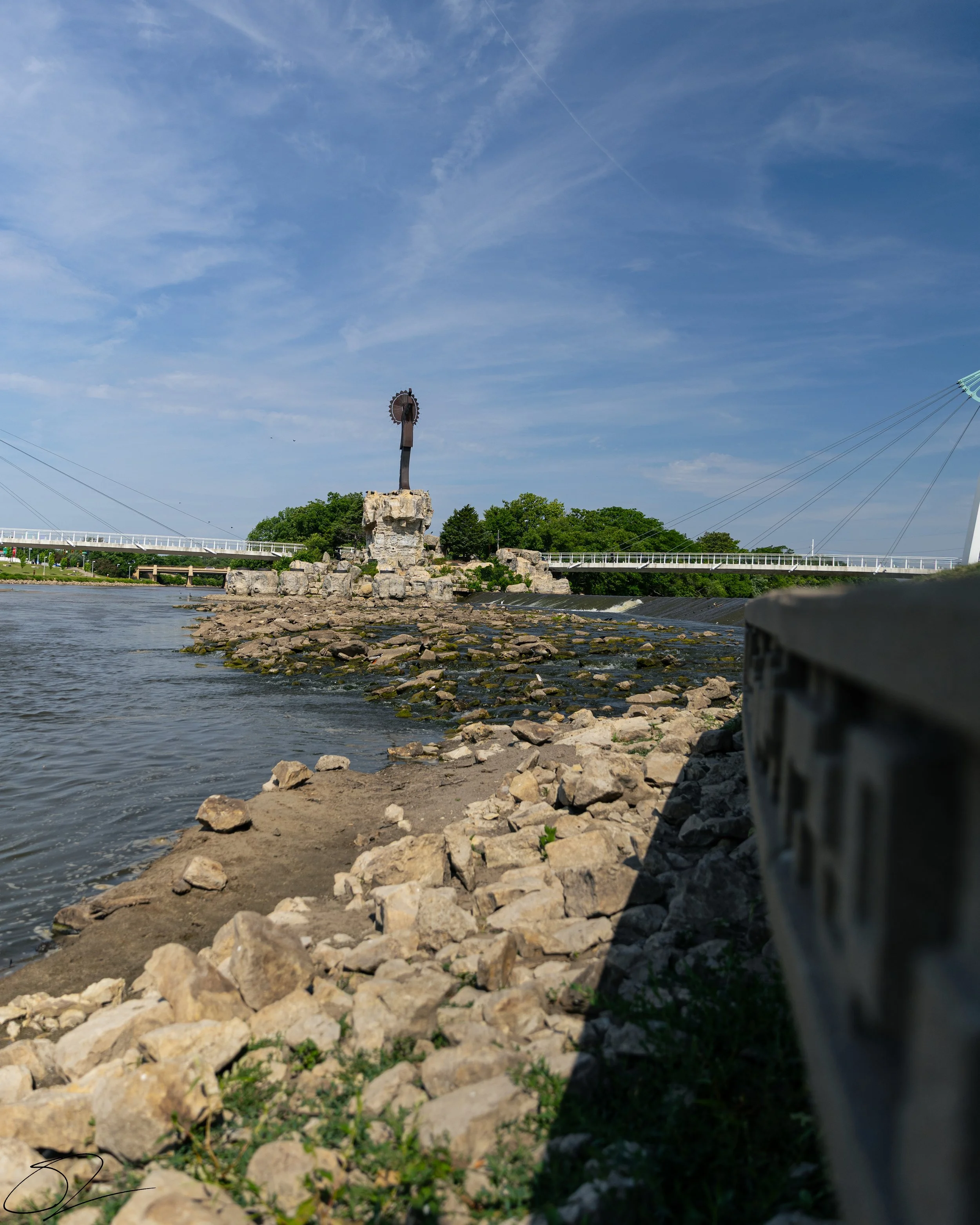
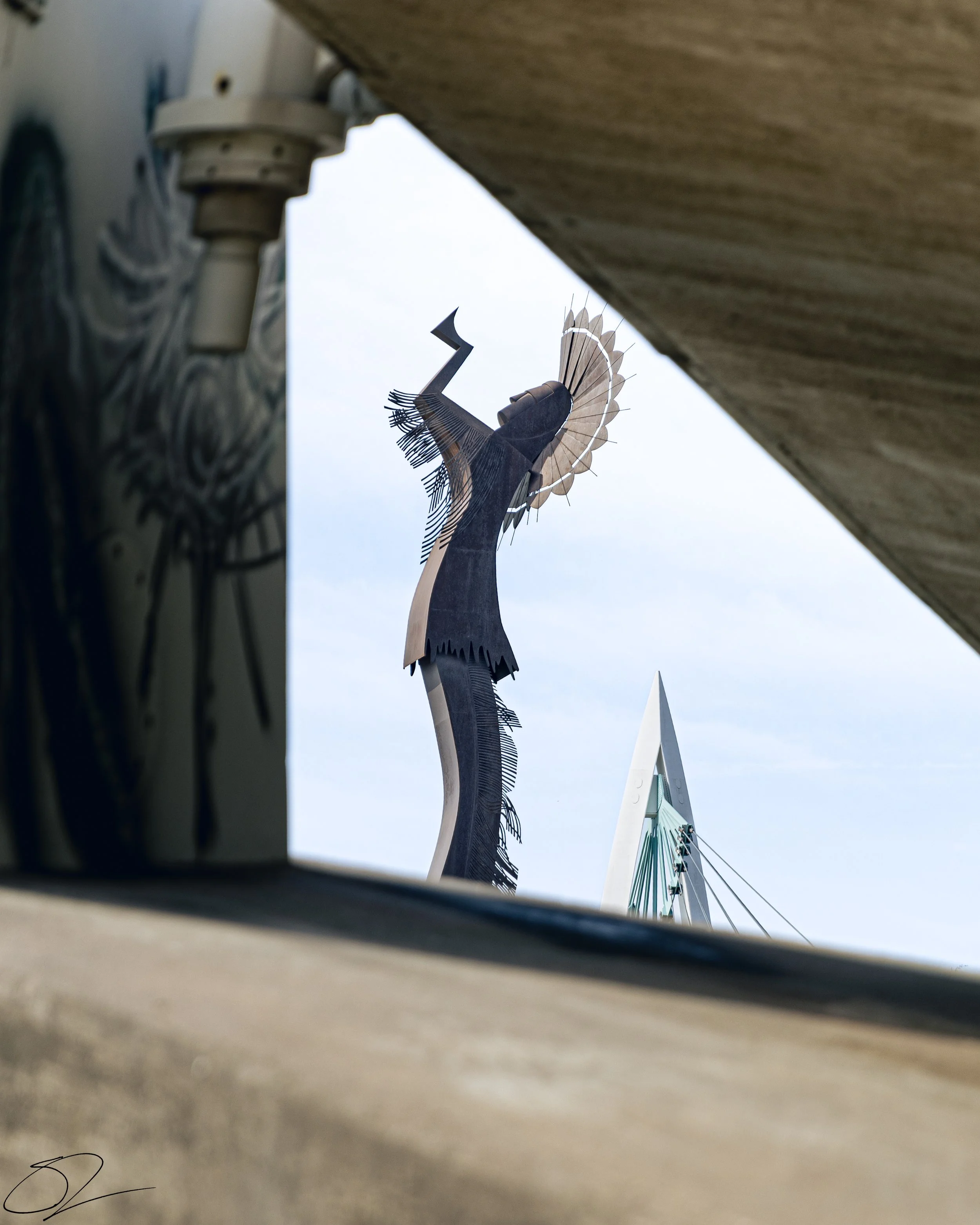
There's a reason this spot ends up on nearly every Wichita photographer's portfolio — it earns it. The Keeper of the Plains sculpture, standing at the confluence of the Arkansas and Little Arkansas rivers, is nothing short of magical during golden hour. The warm light catches the steel of the statue, the river reflects the sky in layers of color, and the surrounding landscape gives you plenty of compositional options.
Pro tip: Arrive 20–30 minutes before sunset to scout your angle and find your footing. Then stay after dark — the fire rings around the base of the statue light up at dusk and create a dramatic, glowing scene that's worth every extra minute you stick around.
2. Use the Downtown Skyline as a Backdrop
For a more urban golden hour shot, head to the east bank of the river near Douglas Ave and face west. As the sun descends, the downtown Wichita skyline catches the warm light beautifully, and the river in front of you doubles the color with a perfect reflection.
A wide-angle lens (16–35mm range) works great here — it lets you capture both the reflection on the water and the full sweep of sky above in a single frame. Look for still water conditions for the cleanest reflections, which tend to happen on calm evenings with little wind.
3. Know Your Seasonal Sun Angles
Golden hour isn't the same all year long — and in Wichita, the difference between a summer and winter sunset can be dramatic in terms of both direction and quality of light. In summer, the sun sets more to the northwest, while in winter it dips to the southwest. That shift affects which locations work best and how shadows fall across your scene.
Use a free app like PhotoPills or The Photographer's Ephemeris to plan exactly where the sun will rise or set before you even leave the house. Knowing the sun's position in advance means you can choose your location intentionally rather than scrambling when you arrive.
4. Try Botanica Gardens for Soft Morning Light
Golden hour isn't just for sunsets. Botanica Wichita at sunrise is a genuinely special experience. The soft, warm light filters through trees and flower beds, morning dew still clings to petals, and — best of all — you'll likely have the place nearly to yourself.
The dew disappears quickly once the sun climbs higher, so this is a "set your alarm" kind of shoot. The payoff is worth it: dewy, backlit flowers with warm golden tones are some of the most compelling nature photos you can create right here in the city.
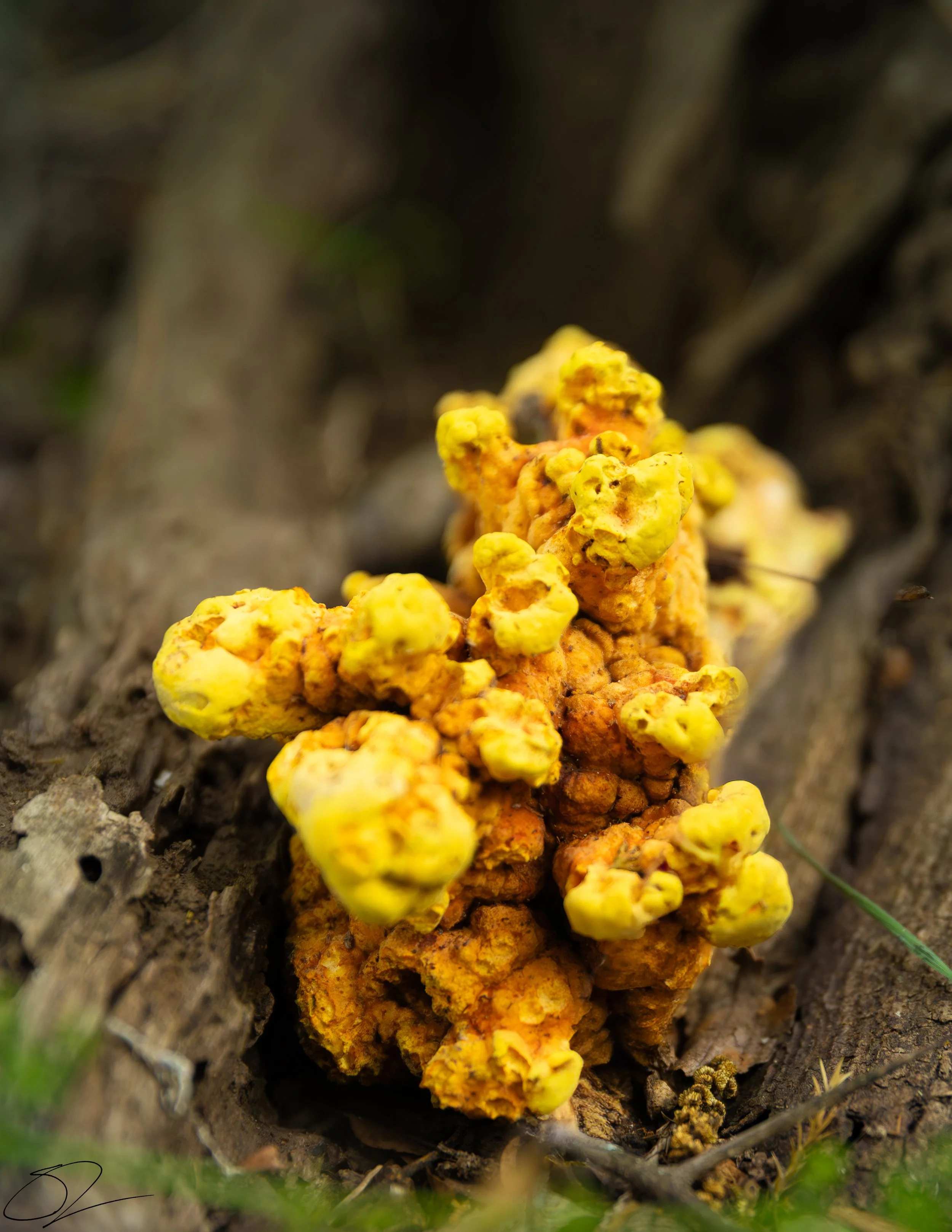
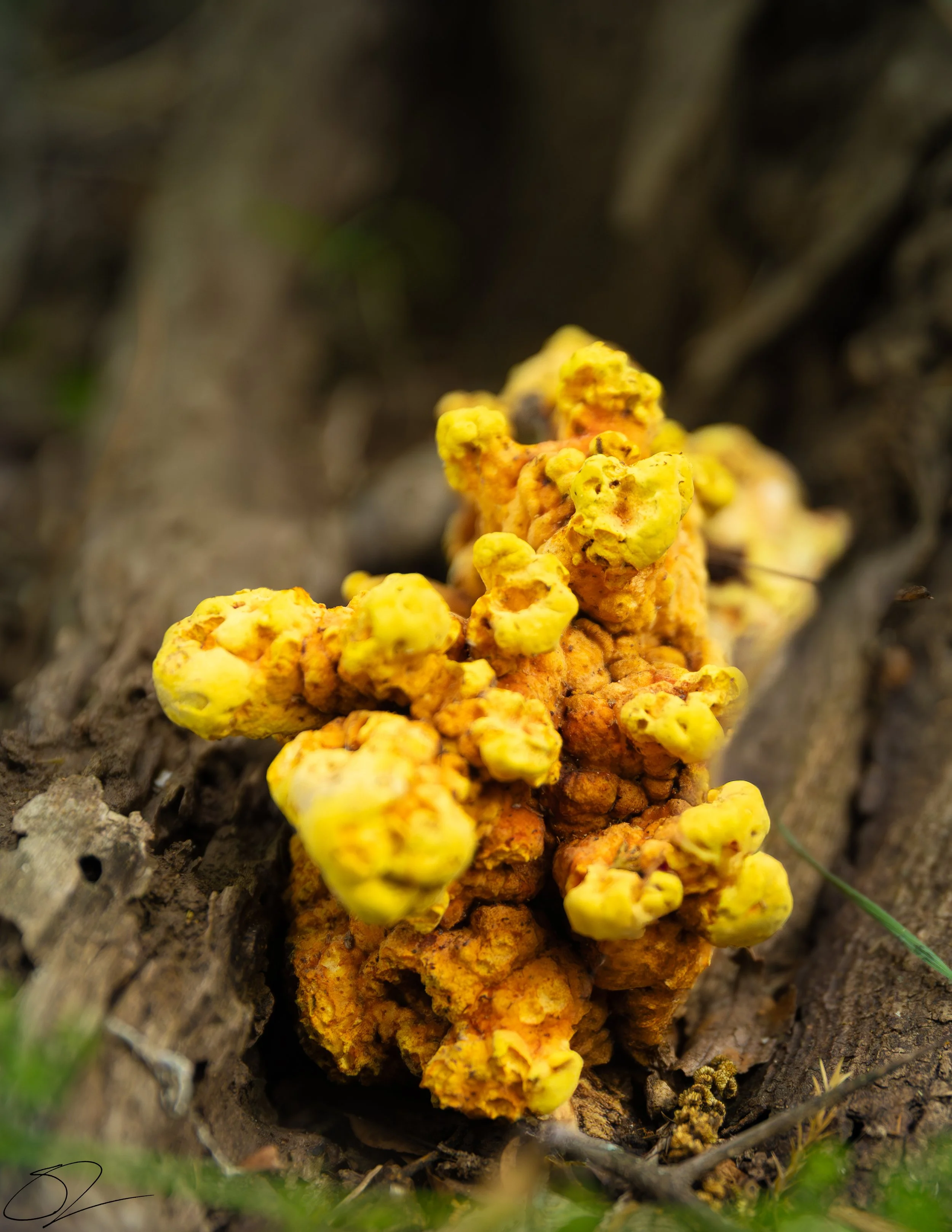
Chicken of the Woods
5. Don't Pack Up When the Sun Goes Down
This is the mistake most photographers make: they pack up the moment the sun disappears below the horizon. But some of the best color in the sky happens in the 10–20 minutes after sunset, during what photographers call the "blue hour."
The sky transitions from warm oranges and pinks into deep purples and blues, and the city lights begin to glow. This window is ideal for capturing the Wichita skyline with a rich, moody backdrop that you simply can't replicate at any other time of day. Put your camera on a tripod, slow your shutter down, and stay just a little longer — you won't regret it.
Go Shoot Wichita
Golden hour in Wichita is one of those things that rewards the photographers who plan ahead and show up consistently. The light changes every single evening, which means no two shoots are ever the same. Start with the Keeper of the Plains, explore the riverfront, and work your way through each of these tips over time.
Have a favorite golden hour spot in Wichita we didn't mention? Drop it in the comments below — we'd love to hear about it.
Next in the series: Hidden Wichita – An Urban Exploration Photography Guide
Establishing Shot!
Here we go! Socials are running, website updated, and announcements made! Today officially marks the launch of the Establishing Shots Sessions in Wichita, KS. During the remainder of April and May I will be doing photo work for extremely cheap to develop the portfolio and start growth in the area. I am open to any and all kind of work. I also plan to set up in areas and just offer photos for free.
I am also working on being more active on social media; Facebook, Instagram, Tiktok, and Youtube. I’m excited and nervous to start something for myself, but I know that’s just part of it. So, let's go!
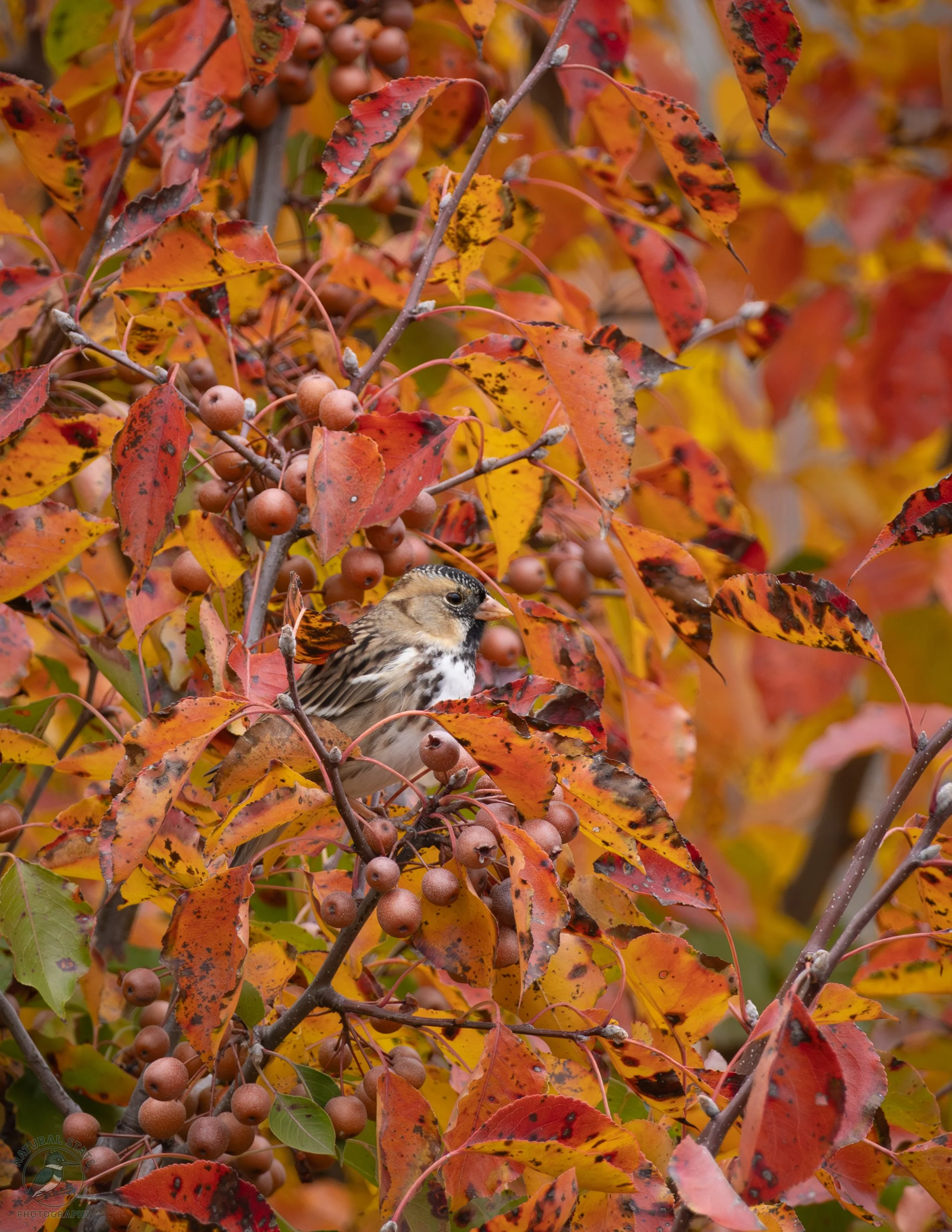
Pracht Wetlands
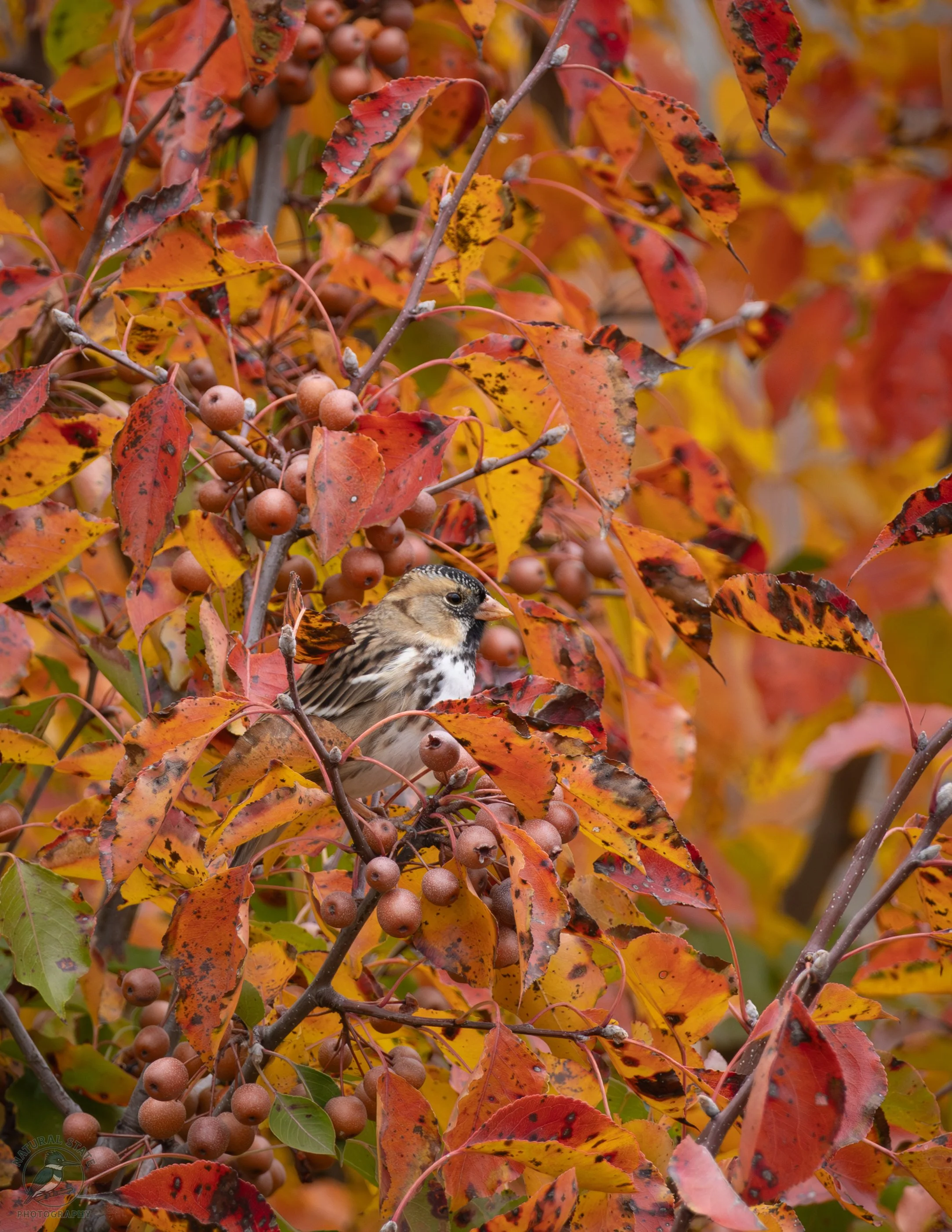
Harris’s Sparrow
Pracht is the first of many new wildlife areas I have explored after the move to Wichita, Kansas. It is close to home and easy reach, park and explore. They are doing some work on a playground but the work means for a quieter area to explore for now. This morning was overcast and windy. In the area was a large group of Northern Shovelors alongside a few Mallards, Canadian and Cackling Geese. The Sparrows though were everywhere and the species variation was just as busy. There were American Tree Sparrows, White-throated, Swamp Sparrows, Fox and Song Sparrows, White-crowned, Lincoln Sparrows. Finally Harris’s Sparrow made a appearance and was very happy to pose in the fall foliage. For a first outing this location was strong and had multiple habitats to check out.
I am looking forward to seeing what else I can find in the area and share.
Time Has Come...
Here at the end of September the time has come to make the shift to Wichita, KS. My wife has been up there for two months now working and staying with a friend, and that has been very challenging. The housing market has been very sluggish this year, and it took almost 75 days to get under contract, but September 30th is the closing date! We will be officially all together in Wichita after that, and hopefully closing on our new house Oct 3rd. I have been slow with my photography due to all the chaos of moving and selling, and keeping up with the house and kids. Hopefully here in the next few weeks things will start to settle in the new house, and it will feel back to the normal pace again.
I am excited about the possibilities there. Not just with new wildlife to document and areas to explore, but a project to start and new skills I want to learn and apply. I am also interviewing for a new job before we leave that is up there, and hopeful for positive results with that. The group is fantastic and the job is interesting with regional travel that will let me see new places and experience new opportunities.
Kansas, here we come!

PgyTech OneMo Lite
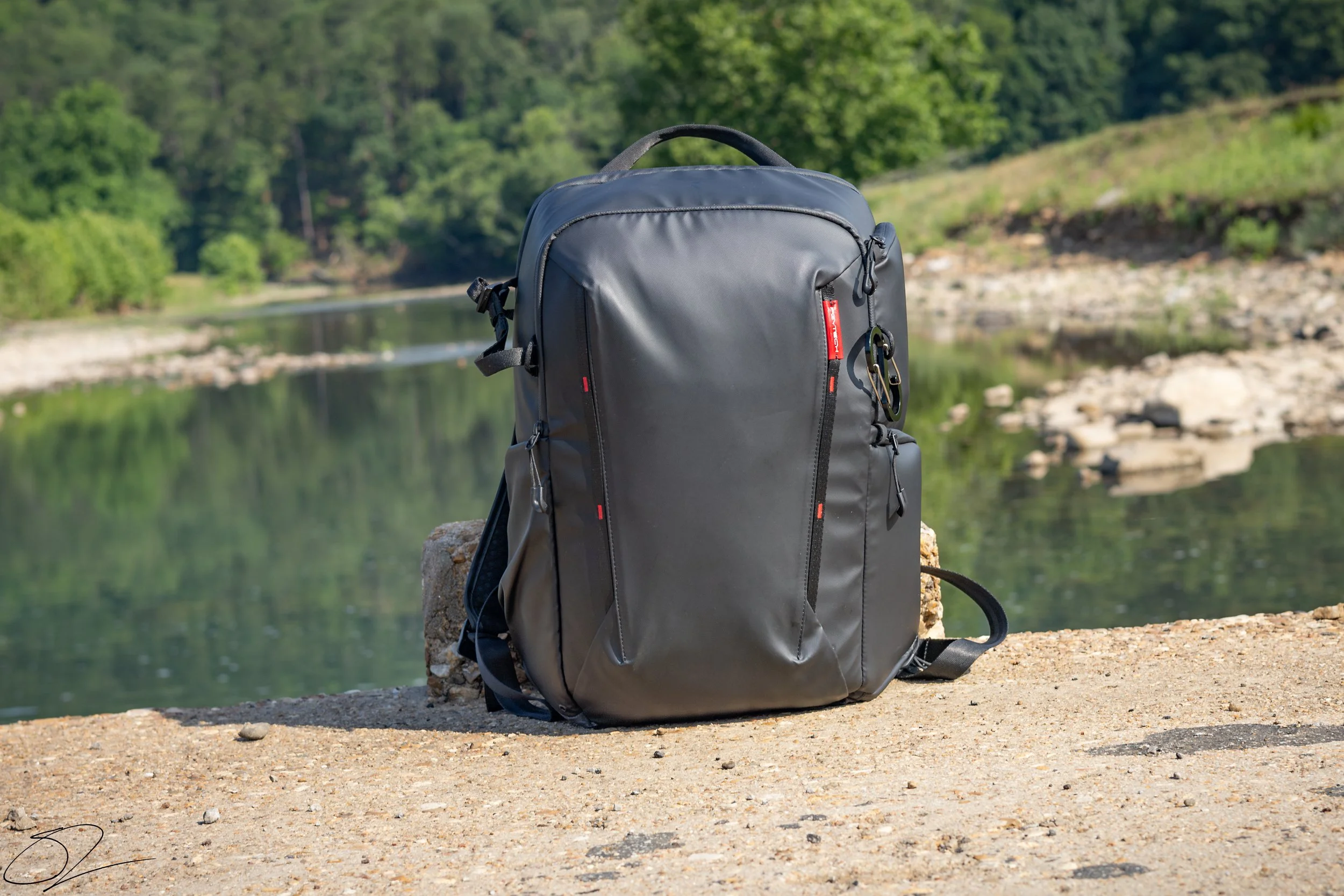
PGYTECH OneMo Lite Camera Backpack 22L
I have carried this bag as a primary camera backpack for well over a year now, and besides minor wear from exposure to the elements and kids it has really held up like a rock. There is plenty of storage space along with customizable spacers to help fit all the gear you need. Right now I have the bag fully packed for adventure with my Canon R8 and RF 100 to 400mm lens in the side door ready to grab and shot. I also have room inside to pack my EF 28 to 70mm F2.8, and my drone with controller, batteries, and many swappable lens. This bag has travelled all over with me, and been on flights without issue. I have been truly impressed with his bag, and I would easily look at another from this brand if I needed a new one anytime soon.
Get yours here! https://amzn.to/41jeuk7

The End to 2024
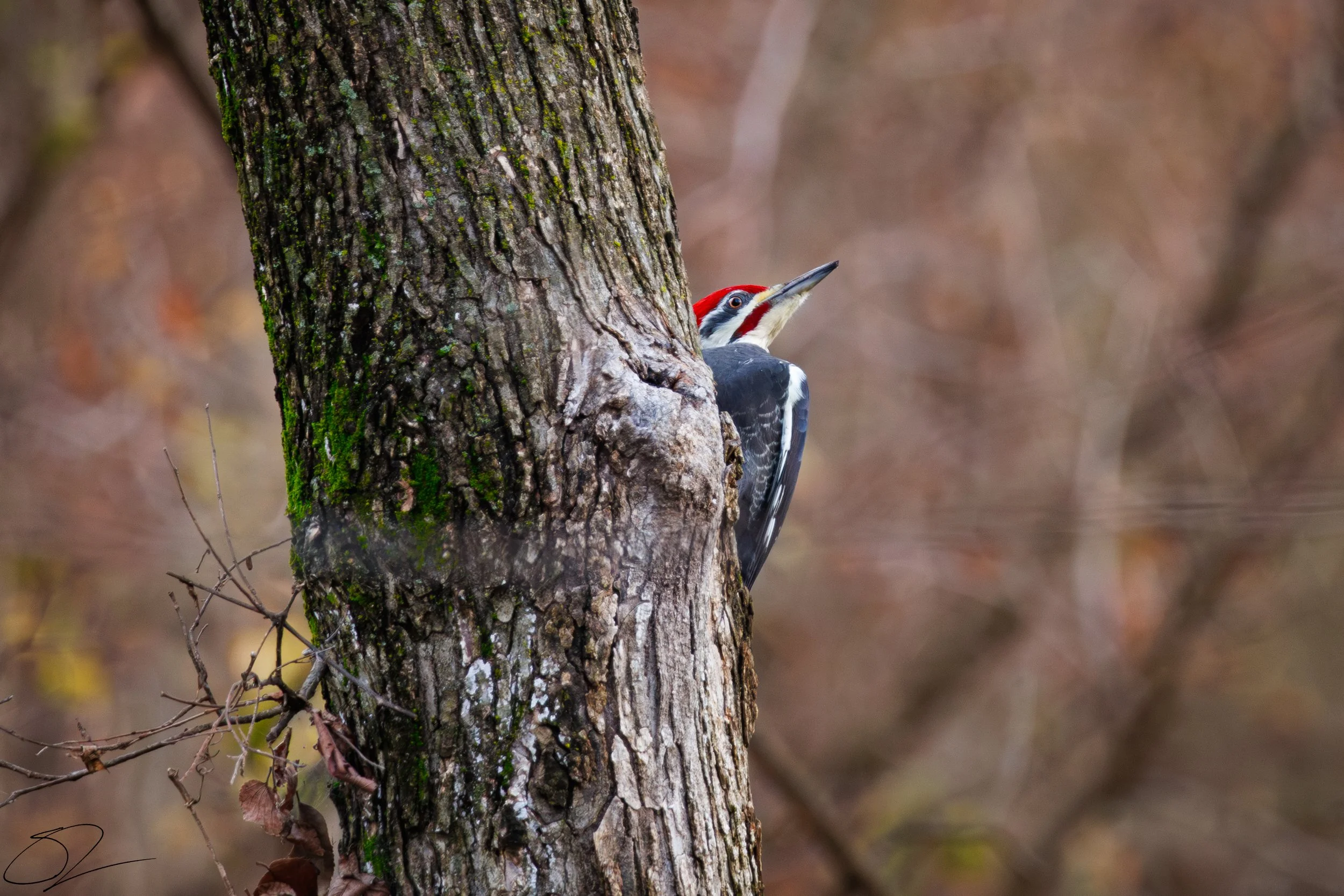
Probably my last outing for 2024 and got a half decent shot of a Pileated Woodpecker along the Arkansas River. This year was a large step for me into wildlife photography and setting a goal of photographing and documenting with ebird as many species in Crawford County, AR as possible for me. I've seen animals that many haven't and experienced some amazing things.
I am ending 2024 with 118 different bird species documented and ranked 16 in the county on ebird https://ebird.org/lifelist?time=year&r=US-AR-033. For normally only getting out on weekends and some lunch breaks I feel really good about that number.
Time to plan a new challenge and project.

Bald Eagle along the shore.
When you get the drive to do something and finally have time to stretch your legs towards that, it feels amazing. I got an extra hour in the morning and was able to go out and take advantage of a nice morning. I saw plenty of fall birds coming in and there was a large group of 50 plus Ring-billed Gulls. I could hear something different in the caucauphany of the gulls. Then I see it fly in and land high in a tree 50 yards in front of me. A year old Bald Eagle with a fresh fish in it’s talon. It stayed in place for a few minutes eyeing the buffet of squrriels and birds in the trees before flying off happy with its catch. This made the day for me and helped to reset my mind to get back to it


Huge check in the box
Male Belted Kingfisher near the Arkansas River
This morning I had a massive win. Since I started getting back into photography one of my personal goals was to get an excellent shot of a Belted Kingfisher. Today I finally achieved that goal and it feels like a weight is lifted, but also makes me realize I can now shift to another elusive target. I did not expect to be able to get within 20 yards of the kingfisher outside of a hide, but today I was given grace and go that close while walking and not concealed.

Male Belted Kingfisher

Shift in focus…
Today I pushed and switched up several things with the site, and links. I have decided to rename to Natural State Wildlife Photography as of 01/24/24 to shift the focus of my photography to wildlife. As of this date I am 24 days into the challenge for Crawford and I am at 34 birds for Crawford County, Arkansas.


The first steps in…
One of the many Red-shoulder Hawks in the Crawford County, Arkansas area. This was a foggy morning and I got the over the shoulder stare down.
I am currently at 20 species recorded in Crawford County within the first 8 days of the year. Weather has been an issue with the cold freezing rain and the mornings thick with fog. I’m hoping soon I can get more of the cold weather birds documented before they leave until the end of the year.

The Crawford Expedition
The Northern Mockingbird was the first bird recorded for the year 2024
On 01/01/2024 I began the Crawford Expedition in order to document as many bird species in Crawford County, Arkansas in a year. Historically the record is 203 species, and I have 12 months to beat it. Crawford County is an amazing area that has many diverse biomes. You have the Arkansas River running West to East on the South border, National Forest and Mountainous regions the further North you travel towards Washington County. There are large lakes, and cold water streams and several wetlands, and a whole lot of opportunity! This will be a fun and big year, and I am excited to start!
Free Time
Recently I have made a huge change in my career out of law enforcement and into security for a private organization. It has flipped my schedule to were I have much more time with my family, but I have to locate time that I can do photography for now. These are a few shots that I got while on lunch at a local park in Fort Smith, AR.

A shore side flower.

A couple of turtles enjoying the mid day sun out of reach.

FAA Certified
It’s Official! I took my FAA Part 107 certification test on July 16th and passed with an 82. This means I can officially offer drone services legally. I have received my temporary license this morning, and I have updated my information to reflect the change. This wasn’t a horrible test but it challenged me to make sure I know what I was doing. Time to get out there and fly!

First Official Session
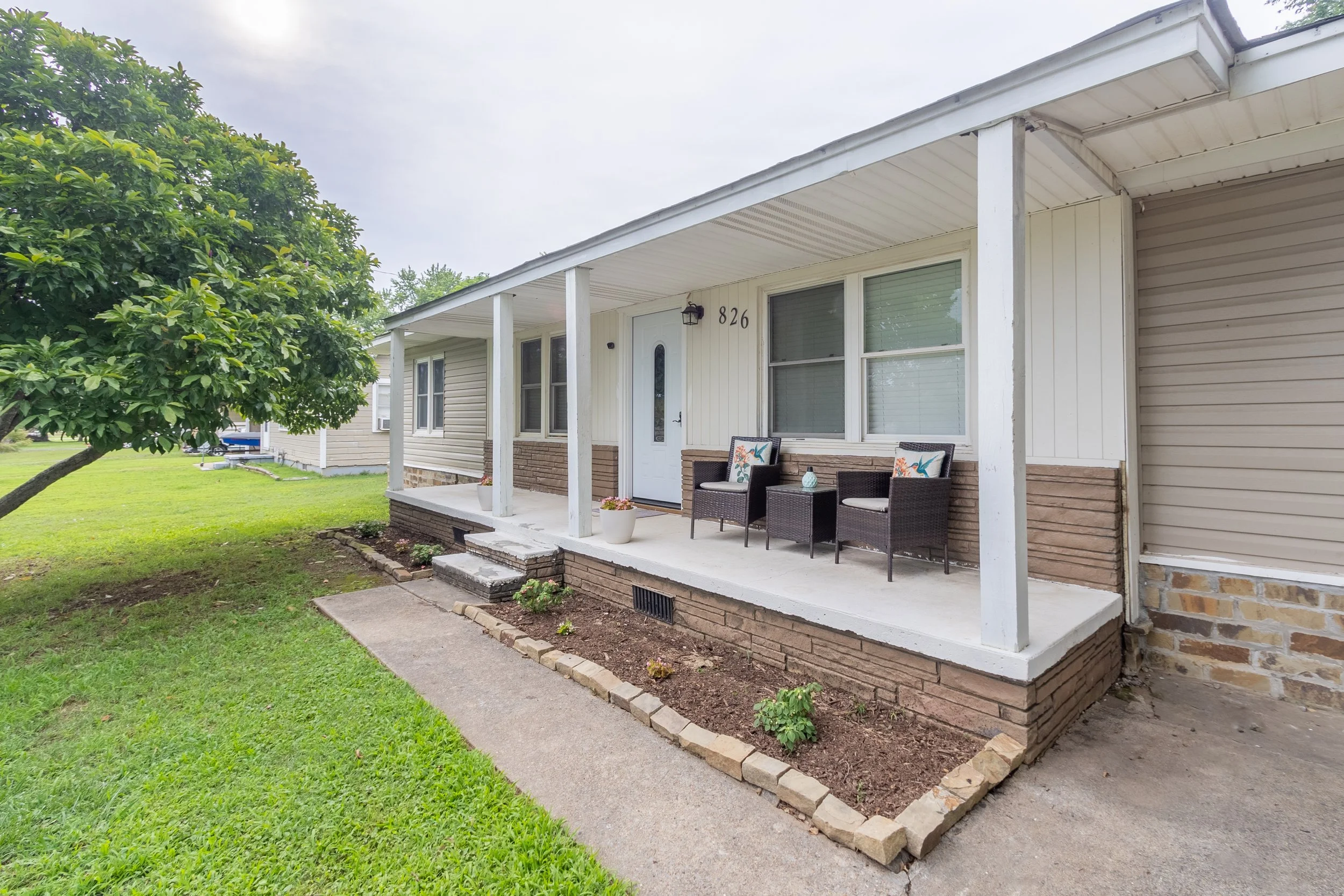
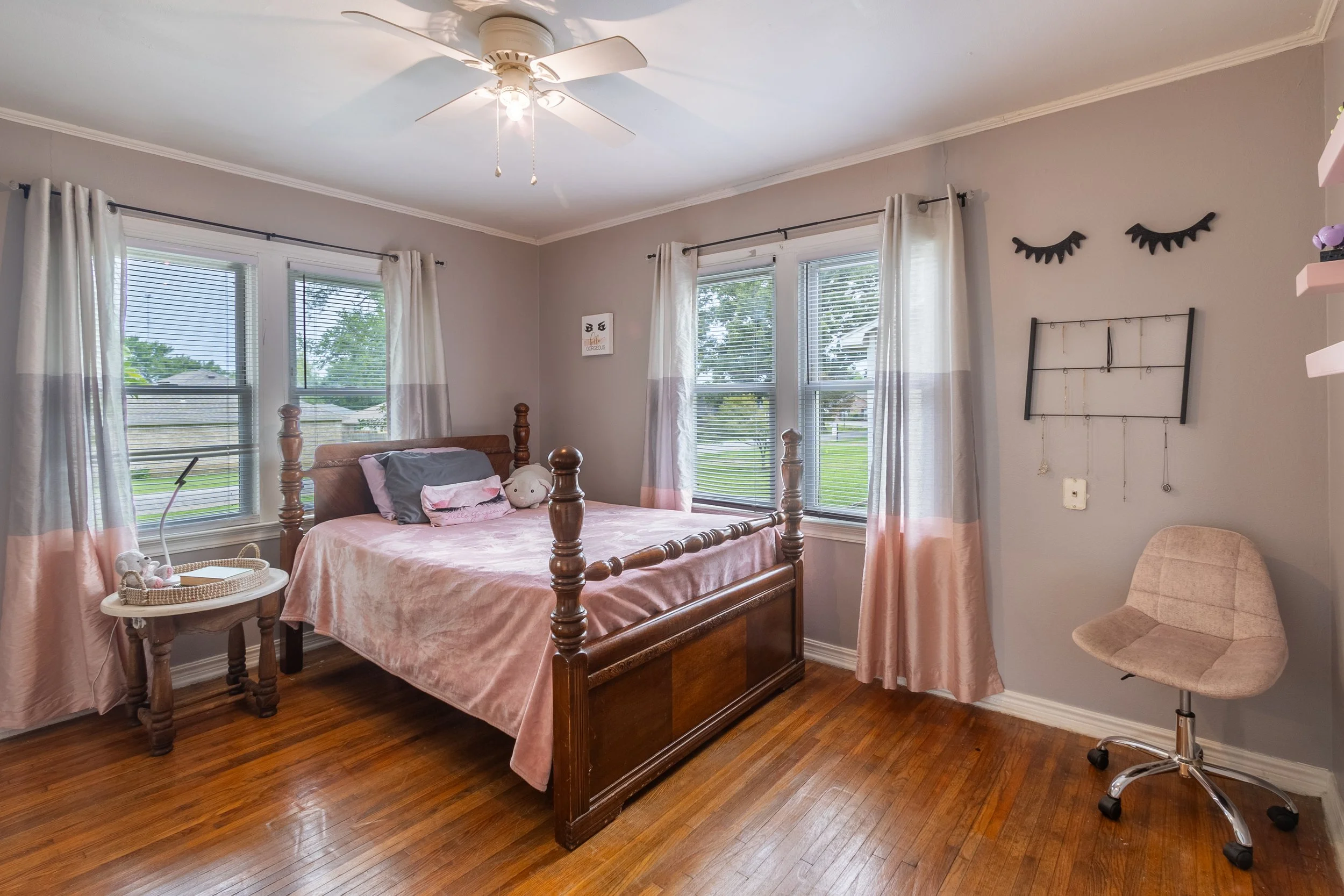
Got my first official Real Estate Photo Session from a great agent will Keller and Williams Platinum. Mrs. Cindy Hughes contacted me on 06/15/23 and asked me to photograph a home in Alma, AR . I arrived, met the seller, and was able to take 26 photos of the home. After editing the images, and delivering them to Mrs. Hughes I now have my very first professional images attached to a home for sale for buyers to see! This feels like a huge step, and I am extremely grateful to Mrs. Hughes giving me a chance.

Peevehouse
Went out to the Peevehouse boat ramp in Van Buren today, and took the drone out for a spin. The day started off covered in clouds, but it turned out to be an awesome day outside. I attempted to do some long exposure with the drone at the dam, buit the waters weren’t turbulent enough to be very interesting. It’s nice to know the Mini 3 Pro can do some nice long exposure shots with the 2000 ND filter on.


Main St
Historic Downtown Van Buren
Today I went on an excursion to Downtown Main St in Van Buren, and took some street photography photos. There were some good angles, but the only thing busy was the traffic. It’s sad, and I wish there was more foot traffic. The only people there to speak to were a couple older ladies who asked what I was photographing, and had a conversation about the historic bank buildings. The splash pad was busy and the kids were enjoying their summer fun and Freedom park is enjoyed by the community.